Insight
Chattogram’s Lifeline: Why Port Reform Matters to Every Household
Chattogram Port is the backbone of Bangladesh’s trade, but persistent delays, fragmented customs procedures and reliance on penalty-based revenue continue to raise business costs and consumer prices. The article argues for coordinated port and customs reform, digital integration, risk-based clearance and performance measures focused on speed, efficiency and trade facilitation.
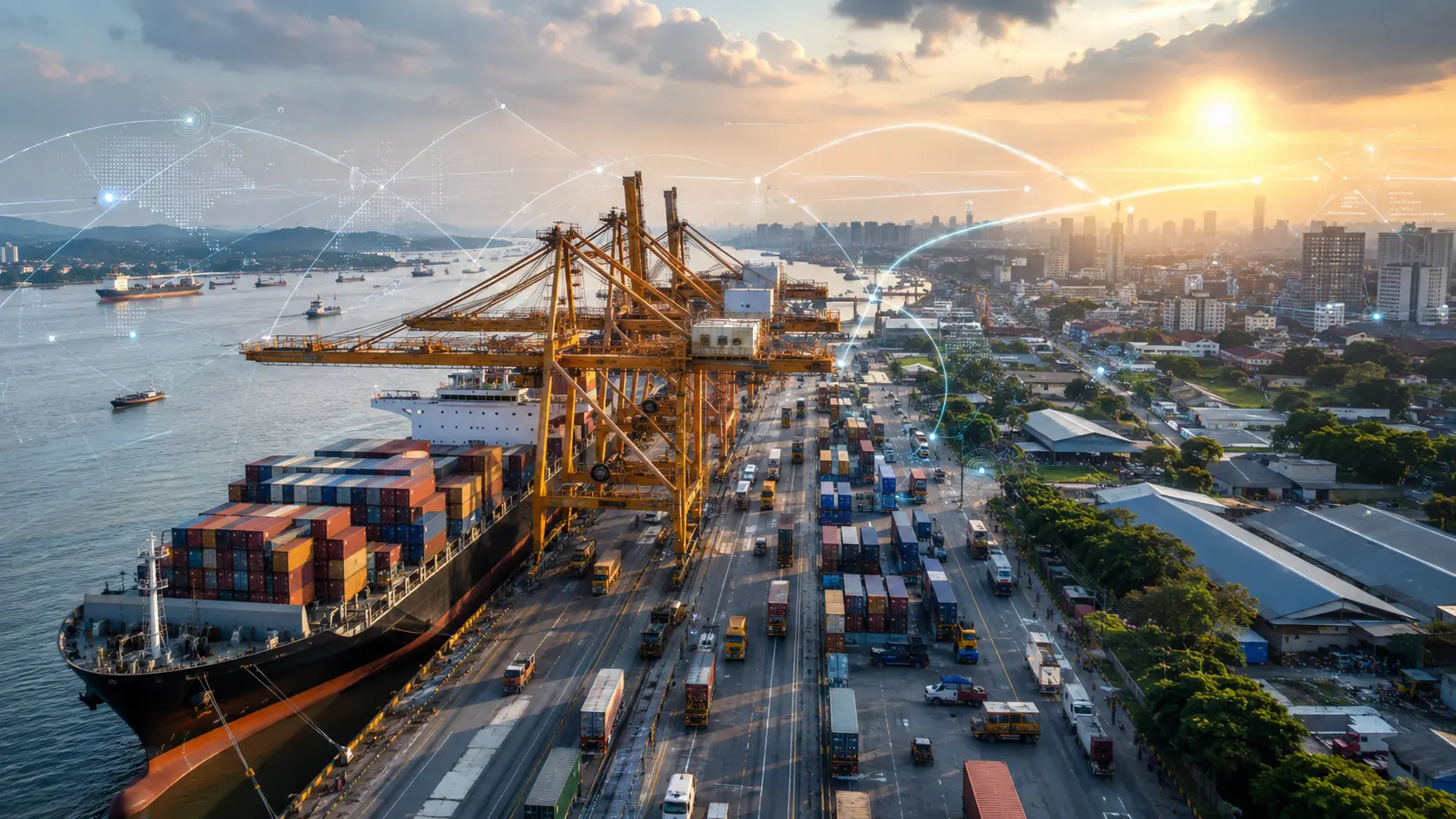
When most of a country’s foreign trade depends on a single port, that port is no longer just a piece of infrastructure. It becomes part of the country’s economic life-support system. For Bangladesh, Chattogram Port plays exactly that role.
Around 92 per cent of the country’s seaborne general and bulk cargo—including food grains, fertiliser, cement and coal—is handled through Chattogram. The port also handles roughly 98 per cent of Bangladesh’s containerised import and export trade. Only a small share moves through Mongla, Payra and the country’s land ports.
The numbers explain why Chattogram Port is often called Bangladesh’s main trade gateway. They also explain why even a modest disruption at the port can be felt across the country. When operations slow down, containers remain stuck or clearance procedures become inefficient, the consequences do not end at the port gates. They eventually reach households from Teknaf to Tetulia.
To an ordinary consumer, a container waiting inside a port yard may seem like a distant concern. In reality, that delay is tied to the price of food, medicine, industrial goods and almost every imported product sold in the market.
The growing debate over Chattogram Port’s actual capacity, container dwell time and the efficiency of the wider logistics chain is therefore both necessary and timely.
Port efficiency is not measured simply by how many containers are unloaded from ships. Two of the most important indicators are vessel turnaround time and container dwell time—how quickly a vessel completes its work at the port and how soon a container leaves the port after arrival.
For years, Bangladesh has struggled on both fronts. Customs formalities, scanning delays, laboratory tests, documentation requirements and weaknesses in operational coordination can keep cargo inside the port longer than necessary. Whatever the immediate cause, prolonged container dwell time points to inefficiency in the wider supply chain.
A more troubling issue is the way revenue earned from these delays is sometimes viewed.
When businesses are forced to pay additional storage rent, demurrage or other penalties because cargo remains at the port, those collections may appear in the accounts of the relevant organisations as income. But money earned from congestion and delay should not be treated as evidence of institutional success.
An efficient port should earn more by handling more cargo, serving more vessels and moving goods faster—not by collecting penalties from cargo that cannot leave on time.
Treating delay-related charges as a dependable source of income creates the wrong incentive. It also raises the cost of doing business throughout the economy.
Importers do not absorb these additional costs indefinitely. Storage charges, demurrage, financing costs and losses caused by delays are eventually added to the final price of goods. Consumers then pay more for rice, pulses, edible oil, sugar, medicine, industrial raw materials and other essential products.
In that sense, port inefficiency works like an invisible tax. It may be imposed at the port, but its burden is carried by households—particularly those with low or fixed incomes.
Businesses also suffer from capital being tied up for longer periods. A shipment that should be cleared within days may remain blocked, forcing the importer to bear additional financing and inventory costs. These expenses travel through the supply chain and ultimately contribute to inflation.
There is a tendency among policymakers to assume that modern cranes, new equipment or a new terminal operator will automatically solve congestion. These investments are important, but they address only one part of the problem.
Faster cranes can move containers from ships to the yard more quickly. But if customs clearance remains slow, paper-based and fragmented, the containers will simply accumulate in the yard. The congestion will not disappear; it will merely shift from the vessel to another part of the port.
In logistics, removing one bottleneck while leaving the next one untouched does not improve the entire system.
Port operations and customs clearance must therefore be reformed together. One cannot become fully efficient while the other continues to operate through outdated procedures.
Complete automation on the scale of Singapore’s Tuas Port may not be realistic for Bangladesh in the immediate future. Nor can such a transformation happen overnight. But that should not become an excuse for postponing practical reforms that can be introduced now.
Bangladesh does not need to replicate the world’s most advanced port in a single step. It can begin by adapting workable solutions already used in other ports and trading economies. Many improvements depend less on expensive infrastructure than on better coordination, stronger accountability and a willingness to redesign existing procedures.
A crucial first step would be to connect the port authority, customs, commercial banks, insurance companies, clearing and forwarding agents, freight forwarders and shipping agents through one integrated digital platform.
At present, the release of a container often requires businesses to submit documents to several organisations and wait for approvals at different stages. The same information may have to be entered or verified more than once. These fragmented, paper-heavy procedures consume time and create opportunities for unnecessary discretion and corruption.
A shared digital platform could allow authorised users to see the status of each consignment in real time. It could show when a container arrived, which formalities have been completed, where the file is being held and why a delay has occurred.
Such visibility would make it harder for files to remain stuck without explanation. It would also allow managers to identify recurring problems and hold the responsible organisation accountable.
Three reforms should be given particular priority.
The first is stronger risk-based customs control. Customs should not physically inspect every consignment in the same way. Modern risk-management systems use trader history, cargo information, country of origin, product type and other data to identify high-risk shipments. Physical inspection can then be concentrated on suspicious consignments, while compliant and low-risk cargo is released more quickly.
Artificial intelligence and advanced data analytics can strengthen this process, but technology alone is not the answer. The system must be supported by reliable data, clear risk criteria and regular audits to prevent misuse.
The second priority is pre-arrival processing. Importers should be able to submit documents and complete as many customs formalities as possible before a vessel reaches the port. Once the ship arrives, eligible cargo could then be released without repeating the entire process.
This would shorten dwell time, reduce pressure on port yards and make the movement of goods more predictable.
The third priority is digital yard management. Automated gate systems, electronic documentation and real-time container tracking would make it easier to locate, move and release containers. Trucks could be scheduled more efficiently, unnecessary movements inside the yard could be reduced, and port users would have better information about when their cargo is ready.
A modern, trade-oriented port should also be judged by the right performance indicators.
Total revenue alone tells us very little about operational efficiency. The amount collected through storage charges or penalties tells us even less. A port can report higher income while its users suffer from longer delays and rising costs.
The key performance indicators should instead include lower container dwell time, faster vessel turnaround, improved berth productivity, smoother gate operations and quicker cargo clearance. The share of revenue earned from actual cargo handling should rise, while dependence on delay-related charges should fall.
Chattogram Port handles the overwhelming majority of Bangladesh’s foreign trade. Its performance must therefore be measured by how effectively it supports the economy, not by how much money it collects from congestion.
Other ports in the region are investing in digital systems, automation and coordinated border procedures to improve their logistics performance. Bangladesh cannot afford to remain dependent on slow, fragmented and paper-based processes.
The consequences go beyond import costs. Export industries also depend on reliable port services. Delays make shipment schedules less predictable, raise logistics expenses and weaken the competitiveness of Bangladeshi products in international markets. Ready-made garments and other export sectors compete not only on price and quality, but also on whether goods can be delivered on time.
The central policy question is therefore straightforward: should Chattogram Port be treated mainly as a source of revenue, or as the country’s most important institution for facilitating trade?
Its primary purpose should be to move goods safely, quickly and efficiently. Revenue should come from higher trade volumes and better services, not from avoidable delays.
Reforming the port and customs systems together would not benefit only large importers, exporters or shipping companies. Lower logistics costs would reduce pressure on product prices, improve supply reliability and ease some of the burden carried by ordinary consumers.
The benefits would reach factories, small businesses, farmers, workers and households throughout the country.
Chattogram Port is often described as the heart of Bangladesh’s economy. That comparison is appropriate. A heart cannot keep the body healthy merely by continuing to beat; it must circulate blood efficiently and without obstruction.
For Chattogram Port to perform that role, Bangladesh needs consistent long-term policies, fewer bureaucratic barriers, effective coordination among public and private institutions, and firm political commitment to reform.
The port must be allowed to become what the economy needs it to be: not a warehouse for delayed cargo or a source of penalty income, but a fast, accountable and modern gateway to trade.